





Woolmark certification: what it truly guarantees… and what it doesn't say
When looking for wool clothing or accessories, one logo often comes up: Woolmark. Recognizable by its stylized ball of yarn, this label has been a global symbol of textile quality for decades.
But what exactly does Woolmark certify?
Is it a guarantee of natural wool?
Is it compatible with an ecological approach?
And why do we find both treated Woolmark wools… and others without treatment?
Woolmark: a historic label of textile quality
Created in 1964 by the International Wool Secretariat, Woolmark had a clear objective: to promote virgin wool globally, in the face of the massive rise of synthetic fibers.
The label primarily guarantees:
- a fiber composed of 100% virgin wool (new, never recycled wool),
- criteria for strength, durability, and retention,
- a series of technical tests (abrasion, pilling, washing, dimensional stability, etc.).
Woolmark is therefore, at its core, a textile performance label, not an ecological label or a naturalness label.
The different Woolmark logos
There are several variations of the label:

Indicates that the product is made of virgin wool and meets Woolmark quality standards.
It provides no information on the treatments applied to the fiber.

Same logic: quality control, no transparency on processes.

machine washable without felting.
And this is where it becomes important.
For a wool to pass these tests, it must almost always undergo an anti-felting treatment: Superwash (chlorination + polymer resin), enzymes, plasma, ozone or other industrial processes.
In other words: this logo implies a modified fiber!
Woolmark and Superwash: a real historical link
In the 1960s-70s, Woolmark largely contributed to popularizing "machine washable" wool, by supporting the deployment of the Superwash process (chlorine + polymer coating).
At the time, it was presented as a modern revolution: no more shrinking sweaters.
With hindsight, we now know that this treatment:
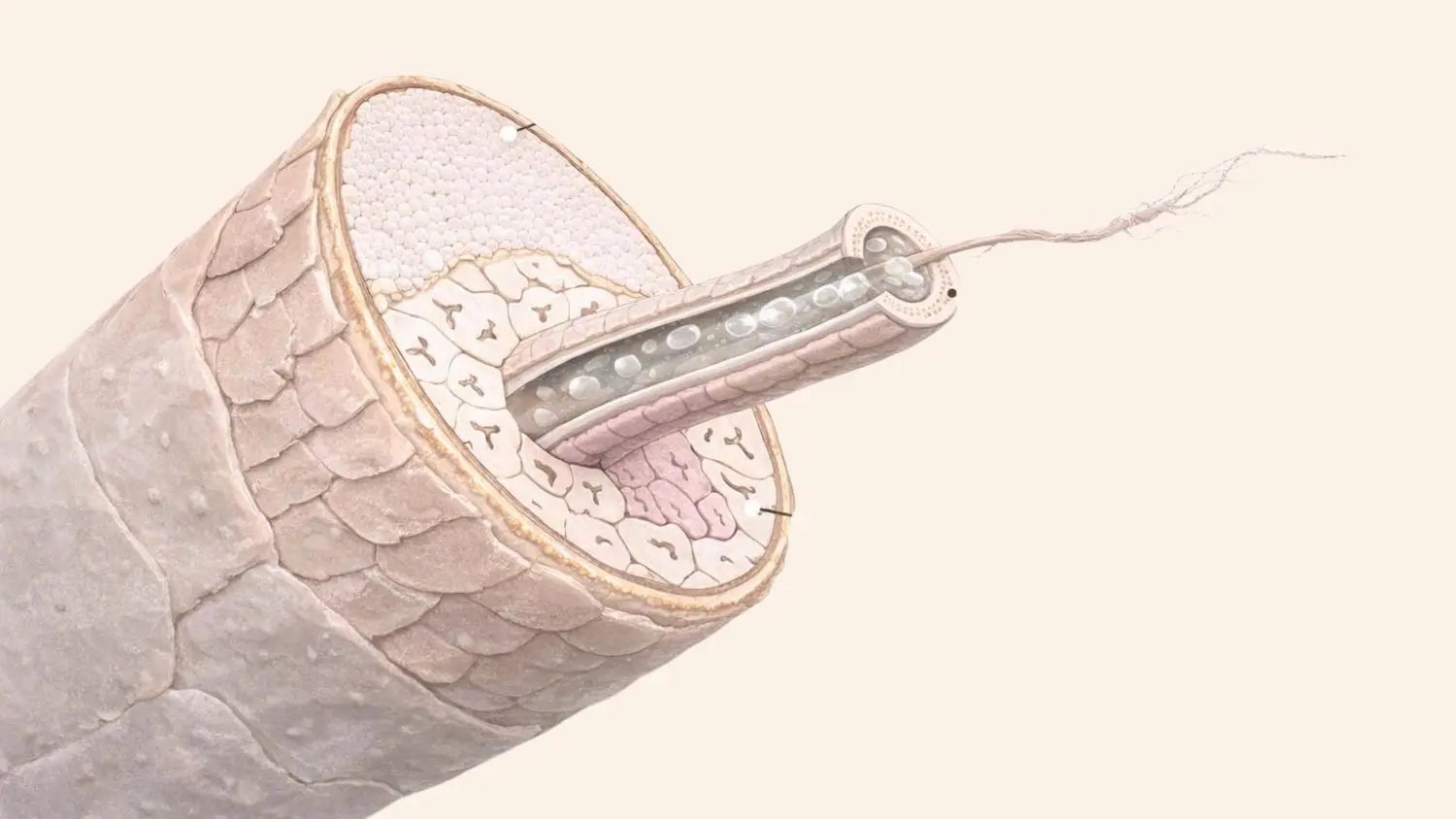
- destroys the natural scales of the fiber,
- alters thermoregulation,
- reduces the antibacterial effect,
- transforms wool into plasticized textile.
Historically, Woolmark has been a major player in the popularization of Superwash :-(
Today, the organization also highlights “gentler” alternatives, but the principle remains the same: adapting wool to modern industrial constraints, not preserving the raw fiber.
What Woolmark does not guarantee
It is essential to understand this:
Woolmark does not certify:
- the absence of chemical treatment,
- the absence of Superwash,
- the absence of enzymes or plasma,
- compliance with strict ecological specifications.
Woolmark guarantees the quality of the finished product, not the natural integrity of the fiber.
So why do some Woolmark brands offer untreated wool?
Because Woolmark does not require Superwash.
It allows it (that's the nuance ;-) -
A brand can perfectly obtain Woolmark with raw wool, provided that it:
- accepts wool care (not machine washing),
- accepts a slight possible shrinkage,
- does not seek “easy care.”
My choice at LiliNappy: going beyond the logo
When I started selecting brands for LiliNappy, I was rather reluctant to offer Woolmark certified products. Why? Because, as we saw above, this label can apply to both raw wools and wools that have undergone heavy treatments (such as Superwash or equivalents). And when in doubt, I always prefer to abstain.
But my work never stops at a logo :-)
I took the time to have lengthy discussions with some manufacturers, notably Alwero and HVID.
These two manufacturers indeed use Woolmark and Oeko-Tex certified wools — but most importantly, they directly confirmed to me that their wool is untreated (neither Superwash, nor enzymes, nor plasma).
Concretely, this means:
- raw wool
- possible felting
- intact natural properties
In other words: untreated wool, as it is originally.
I chose to trust them, first because these exchanges were clear and transparent, but also because your product feedback, for months now, confirms the quality and natural behavior of these wools in daily use.
It's a balance that I fully embrace: not relying solely on labels, seeking information at the source, observing real uses... and building a selection based on both technical aspects, field experience, and trust.
In summary
- Woolmark is a textile quality label, not an untreated wool label.
- Woolmark can certify both raw wools and heavily modified wools.
- The "machine washable" logo almost always implies a treatment (and very often Superwash).
- The only way to know is to question the manufacturer, dig deep, and never give up.
If you want to go further into merino wool, its natural properties, and how to choose it consciously, I have also written a complete guide here: